Strength training and physical therapy are often viewed as two separate parts of the health and fitness world. One may be associated with building muscle and improving athletic performance, while the other is commonly connected with recovering from an injury or managing pain.
In reality, these approaches can work extremely well together.
When appropriately guided, physical therapy can help address movement limitations, pain, weakness, and functional challenges, while strength training can help build the capacity needed to move more confidently in everyday life. Combining rehabilitation principles with a structured exercise program can create a more complete approach to long-term health and fitness.
For people with demanding schedules, personal training in Flatiron, NY can provide a convenient way to stay consistent while receiving individualized guidance. Whether you are returning to exercise after physical therapy, trying to improve your movement, or looking for a more effective workout routine, combining professional training with rehabilitation-focused care can offer several important benefits.
Physical therapy often focuses on helping a person restore function, improve mobility, manage symptoms, or safely return to specific activities.
Once a person has made progress, the next challenge is maintaining it.
This is where strength training can become particularly valuable.
A structured exercise program may help continue developing:
For example, someone recovering from a knee problem may initially work on restoring range of motion and improving basic strength. As symptoms improve and function returns, a progressive strength program may help them continue developing the muscles and movement patterns needed for daily activities, recreation, or exercise.
The transition should always depend on the individual's condition and guidance from qualified professionals. However, moving directly from rehabilitation into a more structured training program can help prevent the progress made in therapy from being forgotten once formal treatment ends.
For this reason, personal training in Flatiron, NY, can be a useful next step for people who want to make improved movement a sustainable fitness routine.
Generic workout programs are not always ideal.
An online workout may tell everyone to perform the same exercises with the same sets and progression, regardless of their movement history or physical limitations.
Personalized training takes a different approach.
A trainer can consider factors such as:
When physical therapy is also part of the picture, the exercise program can potentially be designed with a greater understanding of the individual's movement needs and limitations.
For someone seeking Flatiron personal training, this individualized approach can make exercise feel less intimidating. Rather than wondering whether an exercise is appropriate or attempting to progress too quickly, clients can receive guidance based on their current abilities.
Strength is useful for much more than lifting heavier weights in the gym.
Everyday activities require physical capacity.
Carrying groceries, lifting a child, climbing stairs, getting up from the floor, moving furniture, and walking long distances all require different combinations of strength, balance, and coordination.
A well-designed training program can focus on functional movements that translate into daily life.
Depending on the individual, this may include exercises involving:
The goal is not necessarily to make every person an athlete. Instead, strength training can help improve physical capacity so everyday movements feel more manageable.
This is one reason people may choose personal training near Flatiron, NY, when they want fitness to support goals beyond appearance.
Sometimes people stop exercising because certain movements hurt or simply do not feel right.
Ignoring pain and pushing through every workout is not necessarily the answer. At the same time, avoiding movement indefinitely can contribute to further deconditioning and weakness.
Physical therapy can help evaluate movement limitations and identify factors that may be contributing to symptoms.
Depending on the situation, a physical therapist may address areas such as:
This information can be valuable when developing an appropriate exercise plan.
Once a person understands how to move more effectively and what modifications may be necessary, strength training can help reinforce those improvements through regular practice.
The combination of rehabilitation and progressive exercise can therefore create a bridge between recovery from a problem and a more active lifestyle.
Fear of movement can become a significant obstacle after an injury or painful experience.
Someone who previously experienced back pain while lifting may become hesitant to pick up anything heavy. A runner recovering from a lower-body injury may worry about returning to exercise. Even after symptoms improve, the confidence to resume normal activity may take time.
A carefully progressed exercise program can help.
Rather than immediately returning to the same activity level, training can gradually increase physical demands as appropriate.
For example, a person might begin with:
This gradual approach can help people recognize improvements in their physical abilities.
A qualified professional providing personal training in Flatiron, NY can help monitor technique, adjust exercises, and create a progression that matches the client's goals and current abilities.
Good exercise technique is about more than making a workout look impressive.
Appropriate form can help ensure that an exercise matches its intended purpose and is performed in a controlled manner.
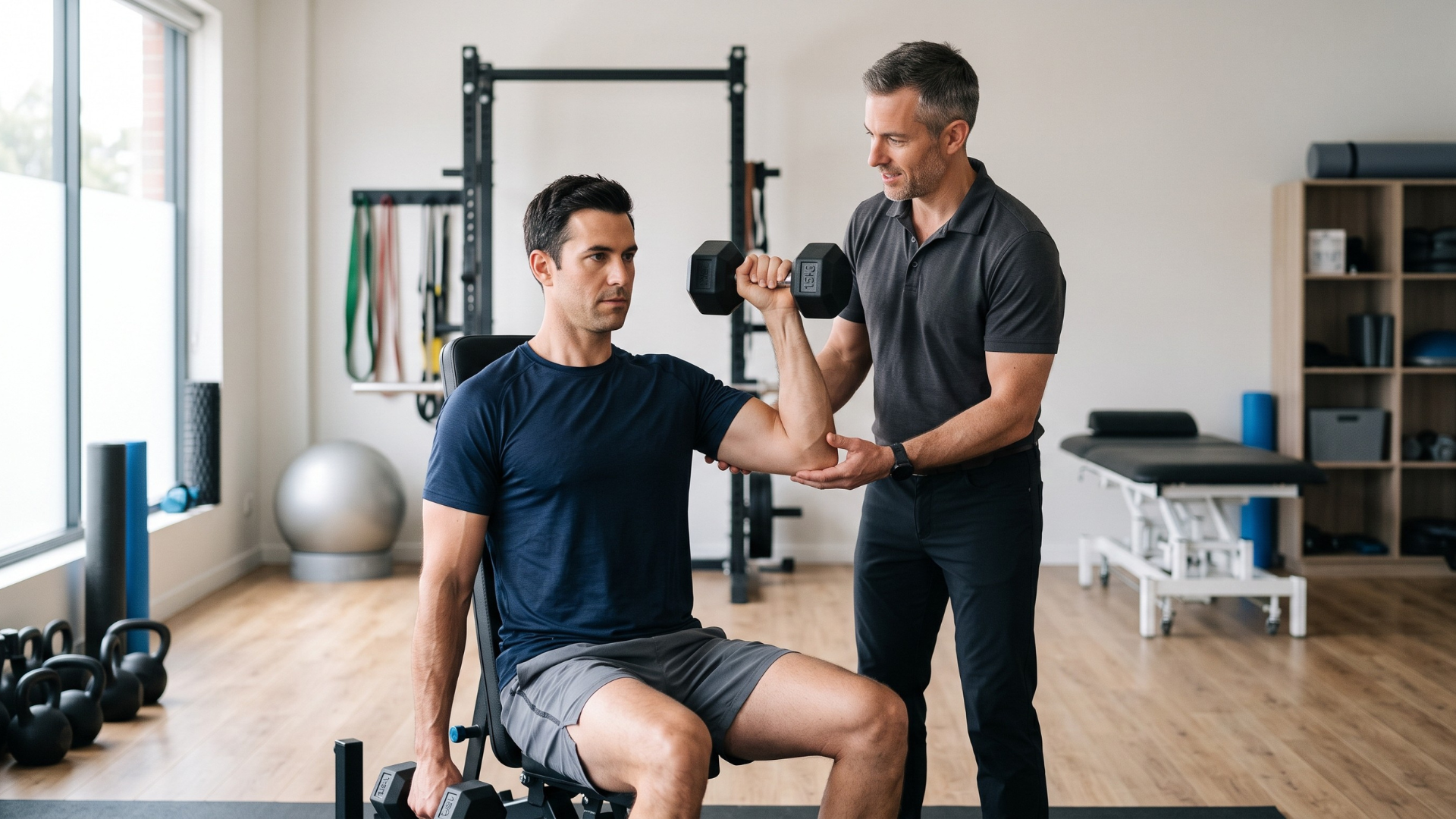
A personal trainer can provide feedback that may be difficult to get when exercising alone.
This can be particularly useful when learning:
Physical therapy principles may also help identify when a particular exercise should be modified.
For example, an exercise that works well for one person may need to be adjusted for someone with limited mobility, a history of injury, or a specific physical concern.
The result is not necessarily a "perfect" exercise routine. It is a routine designed to be effective and appropriate for the individual.
One of the biggest challenges in fitness is consistency.
Many people are motivated to exercise immediately after completing physical therapy or deciding to improve their health. But without structure, that motivation can fade.
A professional training program can provide accountability and a clear plan.
Instead of asking, "What should I do today?" you have a program built around your goals.
For people looking for personal training in the Flatiron District, this type of structure can be especially valuable when work, commuting, family responsibilities, and social commitments make it difficult to maintain a regular fitness routine.
Consistency does not require exercising for hours every day.
A realistic program that fits your schedule and combines strength training with physical therapy principles is often more sustainable than an overly ambitious routine that quickly becomes impossible to maintain.
After an injury, illness, surgery, or prolonged period of inactivity, people can lose strength and endurance.
Even everyday activities may begin to feel more difficult.
Once it is medically appropriate to increase activity, progressive exercise can help rebuild physical capacity.
A trainer may adjust variables such as:
This allows the program to progress gradually rather than expecting the body to immediately return to its previous fitness level.
When combined with appropriate physical therapy guidance, this approach can help create a more manageable path back to regular activity.
Convenience plays a major role in whether an exercise routine lasts.
Even the best workout program is unlikely to be effective if it does not fit into your life.
Working with a professional who offers personal training in Flatiron, NY can simplify the process. Instead of spending time researching exercises, creating your own program, and wondering how to progress, you can follow a structured plan based on your needs.
Professional guidance can also help you make better use of the time you already have.
A focused 45-minute or one-hour session can be more productive than spending twice as long wandering through a gym without a clear plan.
When a person is receiving both physical therapy and personal training, communication and appropriate boundaries are important.
A personal trainer and physical therapist have different roles.
Physical therapists evaluate and treat movement-related conditions within their professional scope, while trainers focus on exercise and fitness programming.
When appropriate and with the client's consent, coordination between professionals can help create a smoother transition from rehabilitation to ongoing fitness.
The trainer should understand any relevant restrictions or recommendations, while the physical therapist can help determine when certain activities are appropriate.
This collaborative approach can reduce confusion and help ensure that the exercise program supports—not undermines—the individual's progress.
This approach may be helpful for a wide range of people, including those who:
However, the right approach depends on the individual.
If you are currently experiencing significant pain, recovering from surgery, or dealing with a new injury, it is important to seek appropriate medical or rehabilitation guidance before beginning or significantly changing an exercise routine.
Physical therapy and strength training do not have to exist in separate worlds. When used appropriately, they can complement one another by helping individuals move from rehabilitation toward long-term strength, confidence, and physical independence.
Physical therapy can help identify and address movement-related challenges, while strength training can build on that progress through structured, progressive exercise.
For those looking for personal training in Flatiron, NY, working with a qualified professional can provide the individualized attention, accountability, and programming needed to make fitness more effective and sustainable.
At PhysioRX, we specialize in both personal training and physical therapy for gym and sports injuries, ACL PT, and prenatal and postpartum PT. Contact us today and let’s discuss how our approach can help you achieve the aesthetics and functionality you want.

Ensure you're getting the BEST result possible after ACL surgery. This guide includes videos of the Return to Sports Tests you MUST pass to safely get back to your sport.

.png)
Learn the TRUTH about Low Back Pain and how to overcome it today. These common myths may be hindering your progress and preventing you from being as active as you want!
.png)
Did you know that you do NOT have to put down the barbell to fix the problem? With this free guide you will learn how to rehab AND continue to lift.